
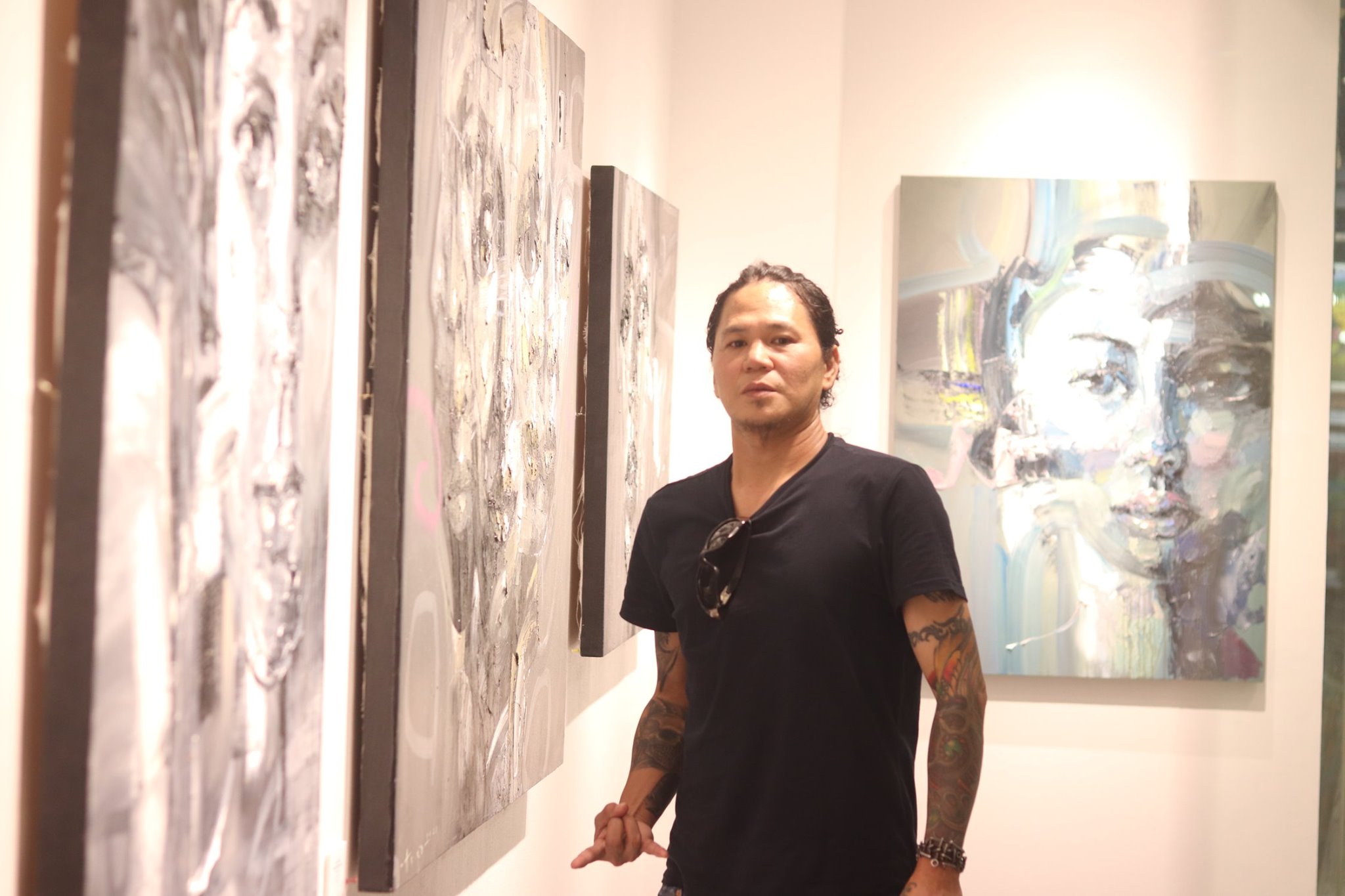
One of the Ilonggo artists who has leveraged national awards to bridge the regional-center divide is Cezar Arro. His trajectory into Philippine art is fundamentally defined by the conditions of his early praxis: an unrelenting grit.
Working from his home in Oton, Iloilo province, he produced early works that were a grueling exercise in technical endurance. Arro says he painted into the pre-dawn hours, balancing his artistic endeavor with the socio-economic realities of sustaining a then-young family. During this period in Iloilo, there was a dearth of formalized institutional infrastructure. This forced artists to exhibit in malls, restaurants, and bars. For Arro’s generation of Ilonggo artists, the pursuit of art was a localized struggle for legitimation in a periphery waiting for validation from the center.
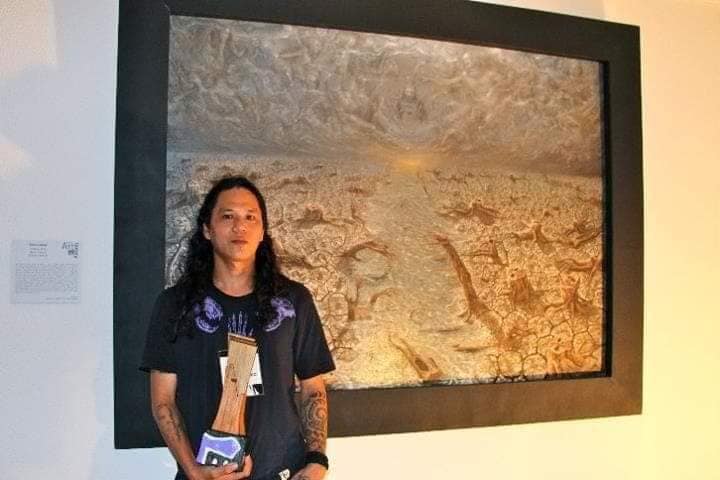
One hope for the regional artists then was to win a “national award”. These competitive award circuits served a dual function. It was a site for critical recognition and a crucial mechanism of survival. For Arro, winning provided the immediate financial solvency required to sustain domestic life and served as a passport into the highly gate-kept markets of Manila and, even, Hong Kong.
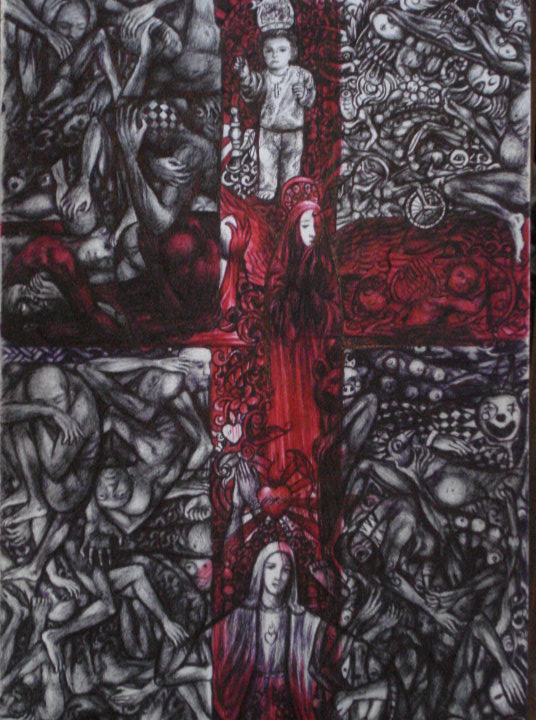
Arro’s “awards phase” was characterized by a rigorous, almost masterful intentionality. Every stroke and detail was calculated, especially since the word on the street was that the juries of these competitions adhere to some specific formulaic composition. Looking at the artworks Arro produced during this phase, the artworks consistently engaged with the iconography of social struggle, which he described in the language of the late-stage manifestation of the movement as “SR”. Somewhat inadvertently, Arro attempted to synthesize external socio-political realities with his own subjective ontological positioning.
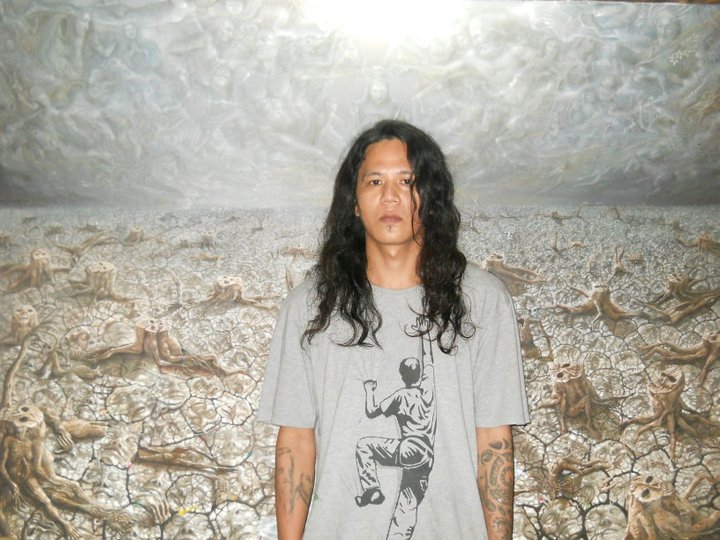
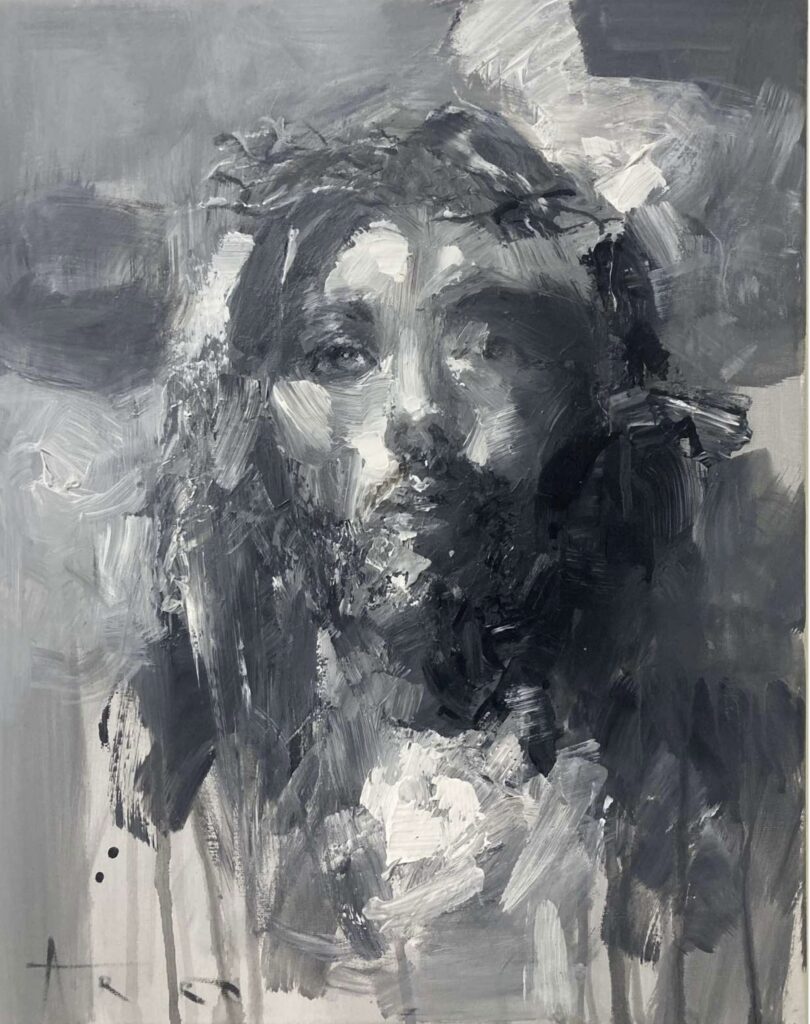
Perhaps the artwork that most potently demonstrates the tension of the artist’s conceptual framework is “Silver Lining”. Through a restricted, monochromatic schema of somber grays and whites, the artist evokes the spiritual sublime, stripping away chromatic distraction to emphasize the thematic weight of the artwork’s theme- the apocalypse. Yet somehow, while depicting the end of the world, Arro called this painting a silver lining.
In 2008, 2010, 2012, and 2014, Arro’s name appeared repeatedly among the list of Philippine Art Awards finalists. This is when his transition from the margins to the center began. Striking while the iron was hot, from 2016 to 2022, Arro received a steady influx of solo exhibitions and inclusion in Manila’s art galleries (Galerie Anna) and art fairs (ArtFair Philippines, Art Apart in Singapore). He was also featured in many magazines and catalogues.
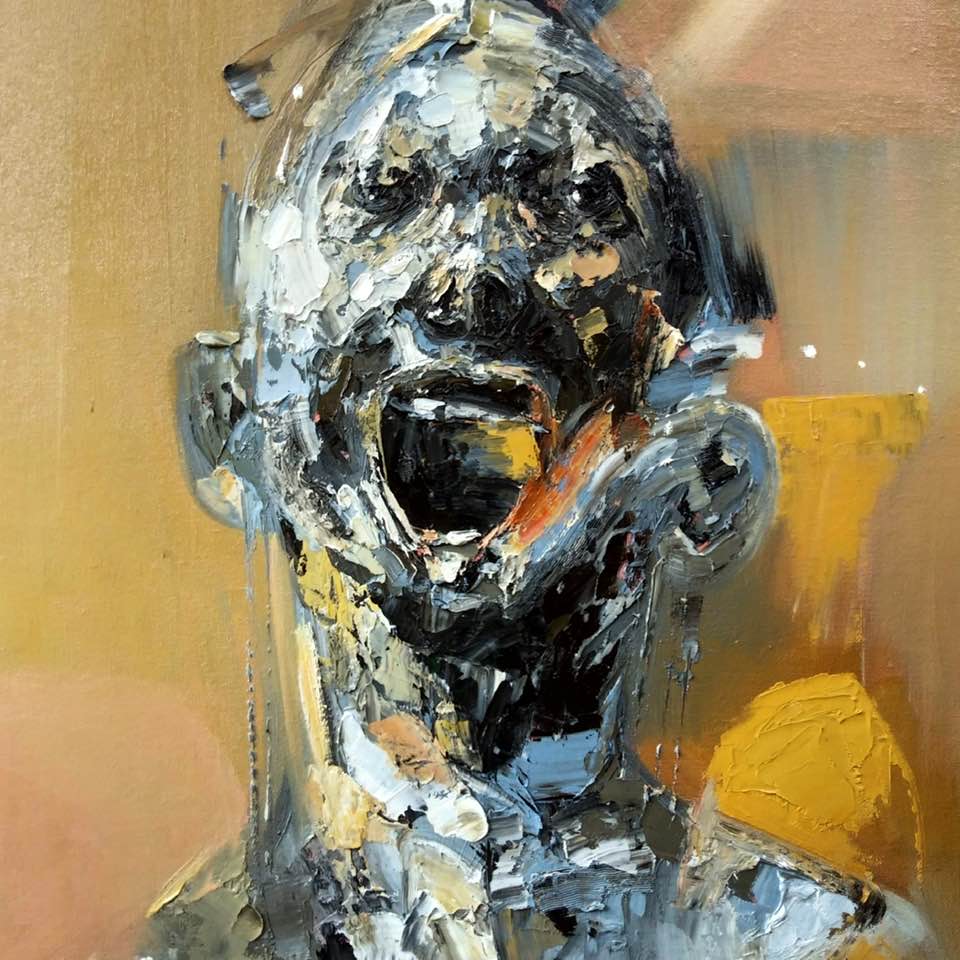
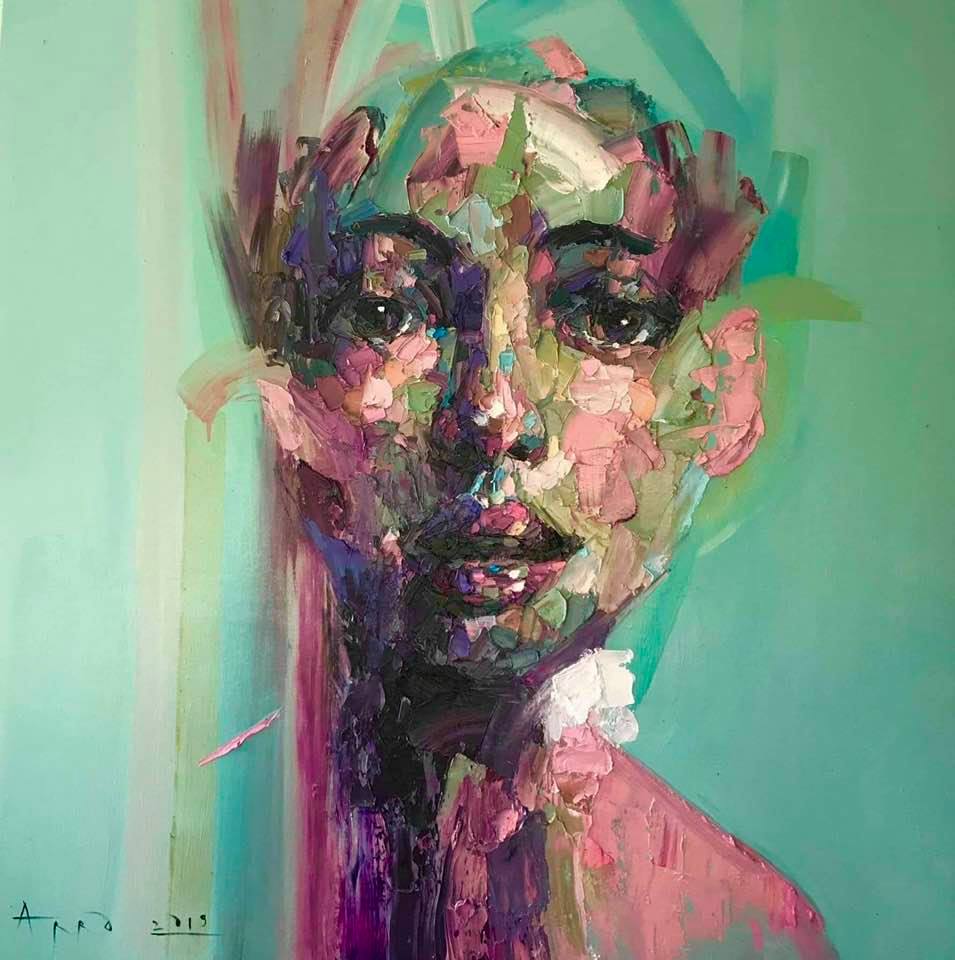
It is also in these years that another style has emerged from his artworks. From the canvas brimming with objects and symbols, Arro veered towards, not an emptier composition but one that leads the audience to a focal point —the human face. There is a noticeable contrast from his dark works. His face has started to inhibit colors. Despite the dominant negative space in these paintings, the emotions that the fullness of the canvas used to embody are reduced into one vessel, the eyes, the windows to a human’s soul.

In his recent work “Whimsical Childhood Garden” (featured in the exhibition Memory is a River at Thrive Art Gallery), Arro returns to a dense composition. In this painting, he utilizes a double-image technique reminiscent of a Gestalt switch, where at first glance, the artwork appears to be a surreal puzzle of flora and fauna, but a second image of a woman appears when the viewer looks at the painting from afar.
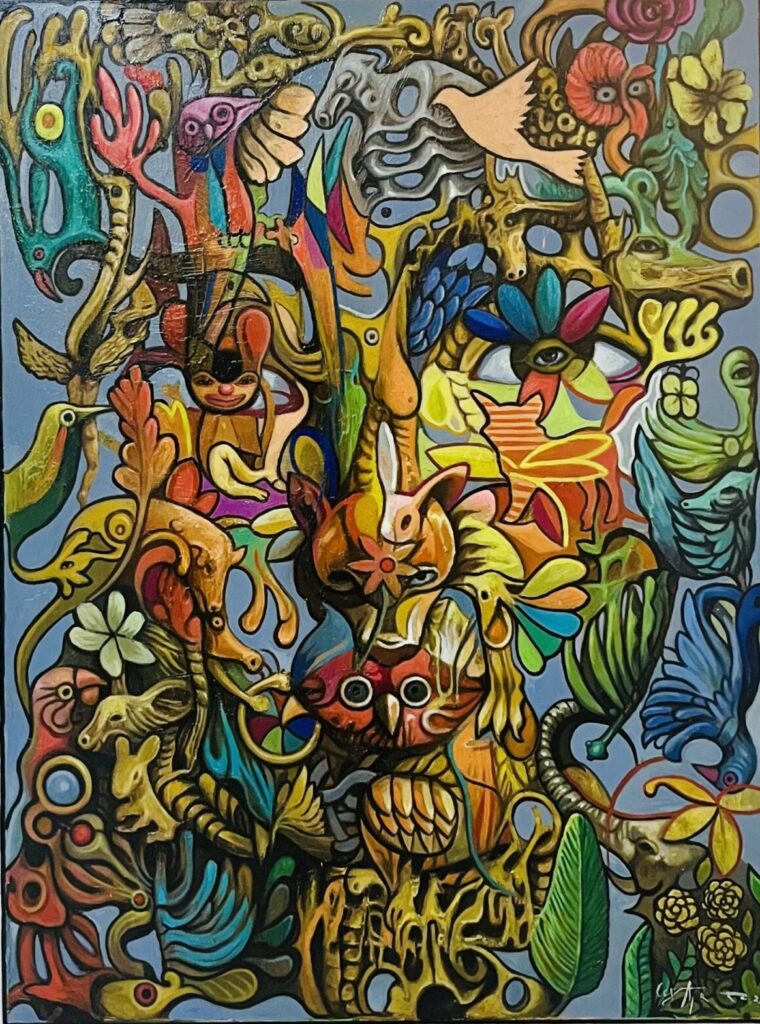
Arro shares that this process, although a style he has many times regressed in the past, is him returning to the canvas unburdened by the expectations of juries, gallerists, or collectors. By embracing these dense, surreal compositions, he revisits his technical roots. For him, the canvas is no longer a site of struggle, but a sanctuary for memory and imagination. He also shares that he has returned to frequently exhibiting in art spaces in and around Iloilo City. This somehow erases the regional-center divide that once dictated his practice. Arro’s current body of work stands as a testament to the artist’s intrinsic autonomy, proving that perhaps the most authentic return an artist can make is the one that leads back to himself.
Photos are from the artist.