
Just your pulse, my racing guide in the dark
Just knowing with conviction from the start
The main street of Silay City is blocked off for its annual Independence Day parade. In a coffee shop called Damgo, as the ground still feels the beat of the drums from the parade, another voice of independence makes itself known.
Damgo Coffee Shop is hosting the “Foreverafters” show during Pride Month. The owner, Jan, a close friend of lead curator Ginoe, was kind enough to open his space for this show. When asked why this location and this date, Ginoe explains: “It was interesting for us to intersect a pride celebration with the Philippine Independence Day. The concept of freedom from our oppressor-colonisers being celebrated, I think, also applies to pride. This date is also notable because it’s Silay’s Charter Day celebration. We thought we could hit three birds with one stone.”
The moment your eyes made an introduction
I felt my second violent breath of life
June is typically the start of monsoon season, so to pick Bonnie Bailey’s “Ever After”, one of the most iconic songs of the summer, was an interesting choice. Instead of embodying the heartbeat of summer, this song was chosen because of its significance to Ginoe and his partner, Reenon, who describes choosing the song as almost becoming like a fresh drink of water. “Unofficially, this track became an anthem of sorts for my loved ones and I, so much so that the first four bars would be instantly recognizable to any of us, and I think these memories build on the sentimental value that we already have for it from the countless times we’ve had dancing to it, where it’s become almost cyclical but each time it would still feel like forever.”

Flawless to the point of being godly
Yeah, I fell hard for your imperfections
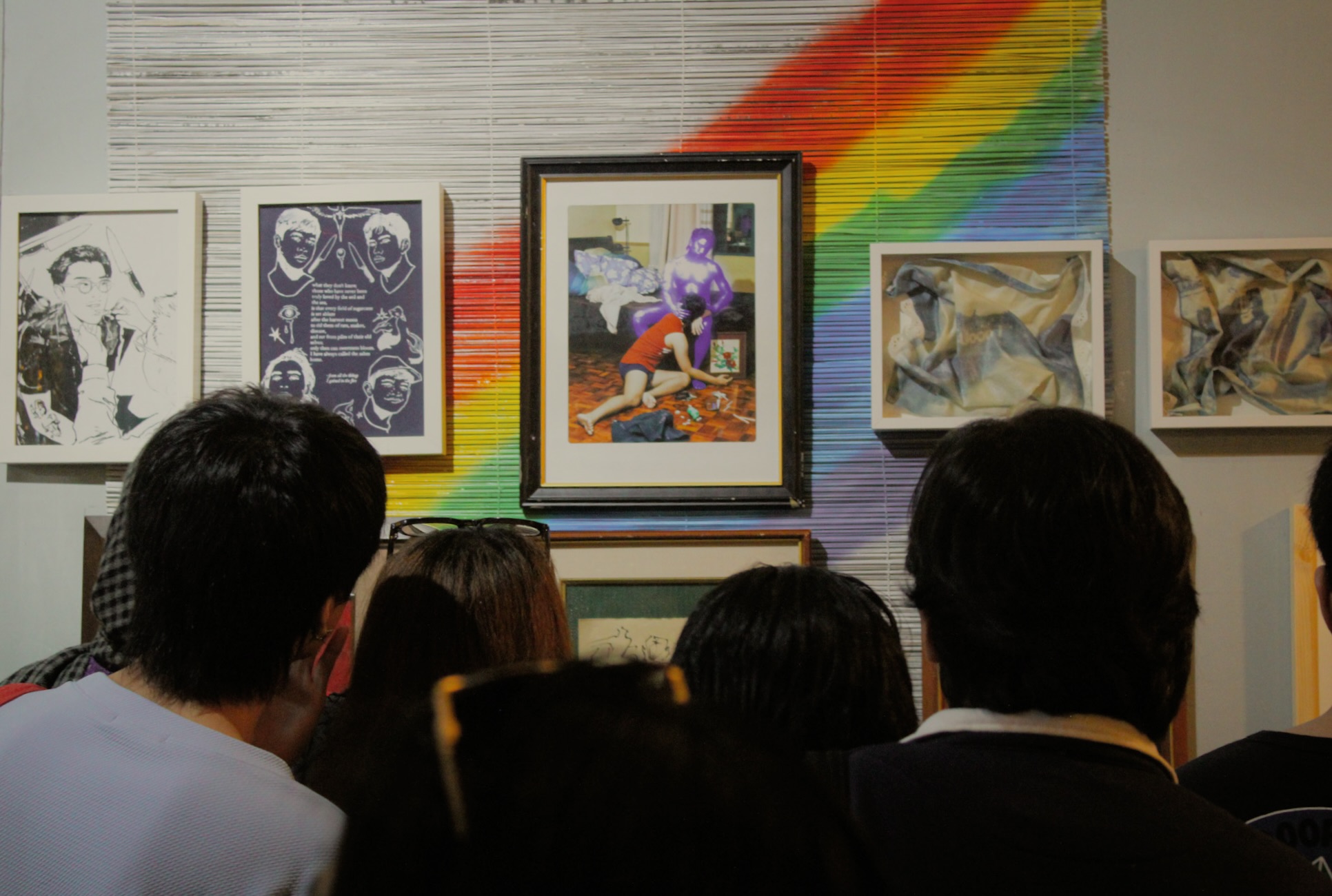
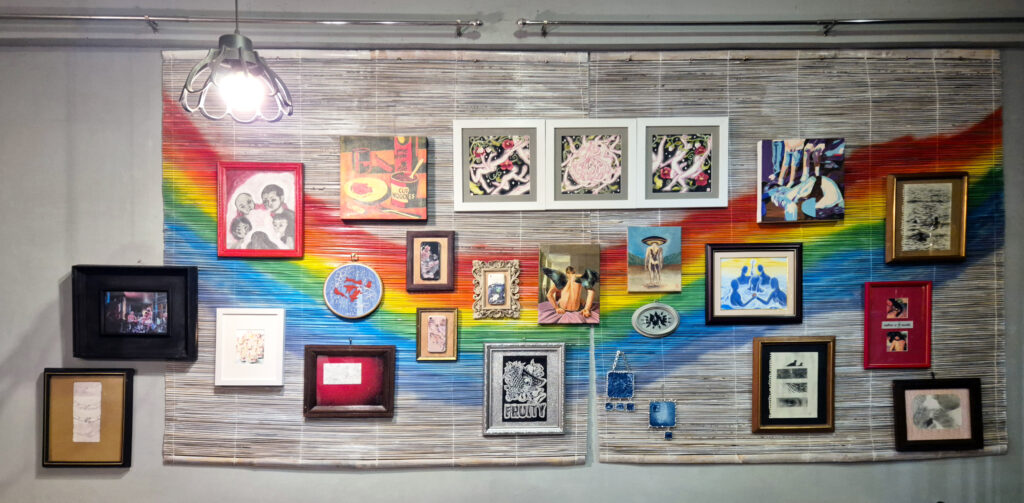
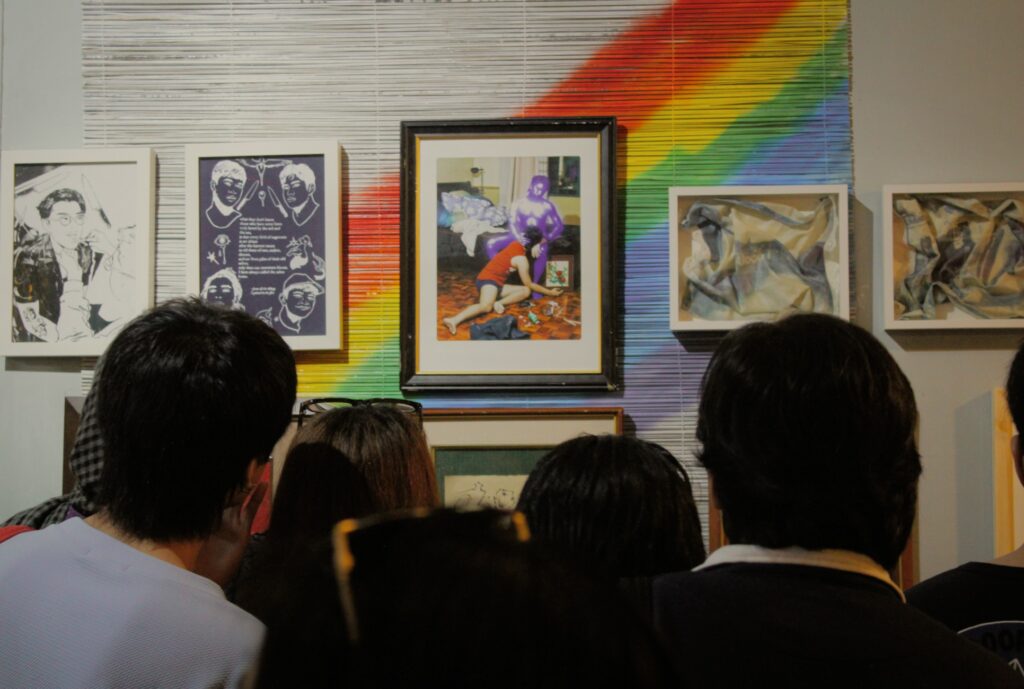
Displayed on the walls of Damgo on rainbow colored bamboo buri blinds, the unfurled curtain gives way to memories of rolling them down to get shade from the sun and heat at the beach. Displaying the pieces this way brought texture and interest to the design, according to Ginoe. This was a change in space to the sterility of a regular gallery while also giving a subtle reference to how the artists used surplus frames from secondhand stores and Japanese surpluses.
And now it’s like the weather is slightly warmer
Hands gripped together, eye to eye through the storm, yeah
By making Damgo Coffee Shop a space that felt more lived-in and almost like an extension of the comfort of home – a cup of coffee, music you love, and the people you care about most- the inspiration for the art was sparked from a place of deep intimacy. According to one of the featured artists, Darla, “ My friends are my inspiration. Late nights together, the afters aren’t always fun. Sometimes it’s chaotic, sometimes full of drama. But it’s the people who hold me through it (and in the after-afters) that hold my heart. Sometimes I’m the one who needs to give a little more. When the sun rises, we see each other. We accept. I see nature. How sunlight dances on water. How the roots of an old tree tangle together. I see us in that. The most natural thing to me is my love, my friendships.” Her work’s titles, “Puli ta?” and “Can I stay here for a while? “give the viewer a glimpse into the intimacy and chaos of the friendships forged through the afters experience.

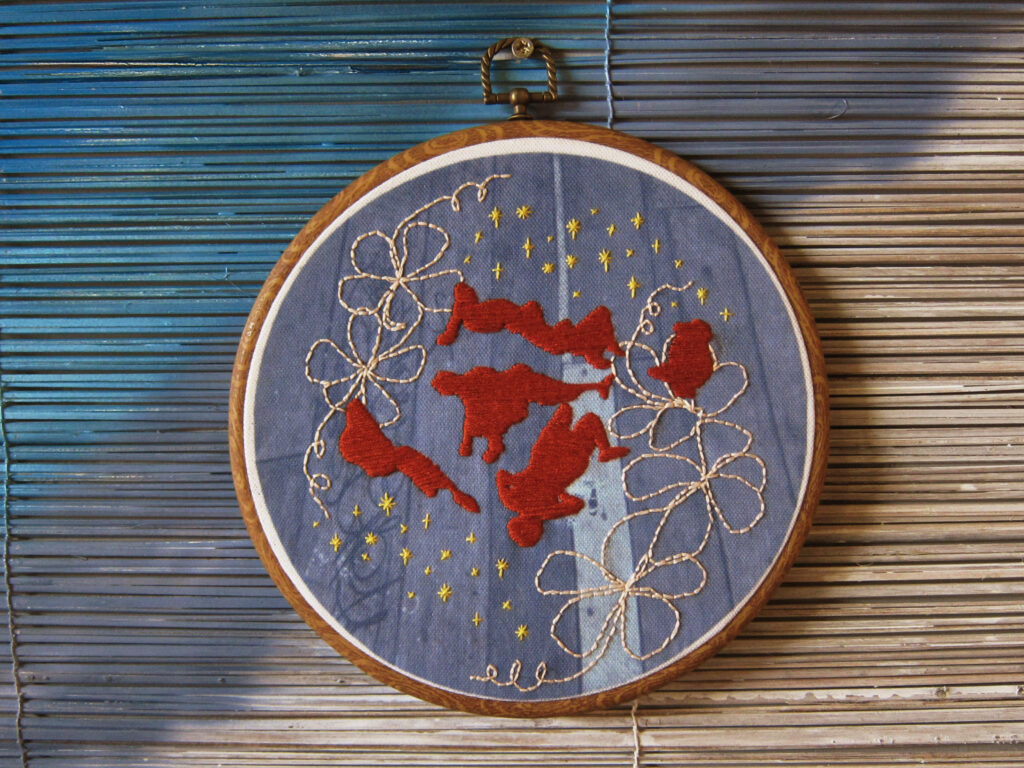
Meanwhile, another participating artist, Ube Becaro, shares the process behind his work, “Summoning Circle“. He shares, “I have several items of clothing that are still with my friends, and there are some of theirs in my closet. This exchange usually happens during a rave or a party. It’s like I have parts of me scattered across many homes, and I, too, am holding on to little parts of people I love. This love language is mainly what inspired the art— shirts lent to me during the afters (so I can get comfortable) printed with images and symbols that represent queer friends who have my back.”
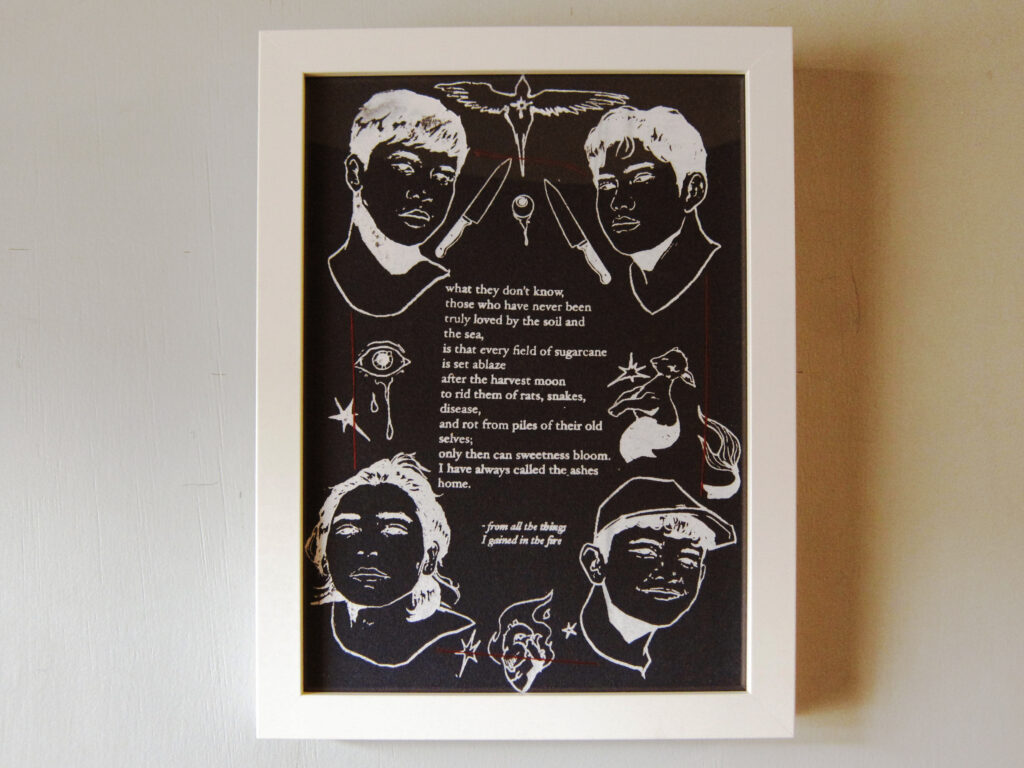
Jethro Ian describes his work, “Morningafter“as wanting it to feel like a soft landing. “My piece draws from the quiet, in-between moments after a rave or night out, when the music fades, and you’re left with what’s real. I’ve always been drawn to that tender stillness, especially within queer spaces where aftercare becomes emotional. I wove together personal memories with imagined ones, almost like building a myth of what it means to belong. Belonging not just to a person, but to a fleeting feeling, a space, or a moment. That’s why the work leans toward the intimate and introspective.”

I still believe in ever after with you
‘Cause life is a pleasure with you by my side
You could say that bonds forged on the dancefloor and strengthened through the intimate spaces of the afters at someone’s house or in quiet spaces create the ties of community that carry throughout life or sometimes, through short seasons. “Queer friendships have shaped everything: how I see, how I feel, and how I create. There’s a kind of bravery and gentleness in queer kinship that stays with me. So much of my practice is rooted in memory and longing, and it’s through these relationships that I’ve come to understand intimacy in its many forms. These bonds often come from a shared sense of survival, and the joy that rises from that is deeply moving,” is how Jethro Ian describes his experience with community and queer friendships, while trying to carry a mix of defiance and softness into his work.
In “Morningafter “Jethro asks the question: “Can I be seen like this? Am I still wanted here, in my rawness?” To be a part of a community is to be vulnerable, to be seen in order to see.
“It felt natural. Vulnerability is easier with a village.” Says Ube Becaro. “ I used to be obliviously self-centric with my art and practice. Due to some insecurities, I did not acknowledge my being an artist until very recently. Hence, I used to really only make art about myself— my shame, even in my desires, the putrid ichor serving as the lifeblood of every piece. With community, you learn to care for yourself so you can care for other people. The lens shifts completely from selfish shame to celebration. When you are part of something bigger, the less important things blur into the background.”
Fellow artist Zabiel Nemenzo adds, “My love for queer friendship is familial as I feel strong connections even in the low tides of our relationship. As life is not just full of high moments, it’s a rollercoaster ride, and I just let myself feel every moment and be affected, for me to fully express myself as an artist. The outcome itself is a reflection of every moment I take in.”
Darla comments,” I’ve always felt unsure about calling myself an artist. I don’t have a fixed practice. I work across things – organizing, making images, building spaces, but what ties it together is my community. I’ve realized my art is in what I can offer them. Making things exist that don’t naturally exist for us as queer people. Spaces, events, small moments of care. Trying to visualize tenderness in my work, especially when it’s not always visible in the world around us.”
The tenderness and vulnerability of queer friendships and the joy that comes with this community aren’t always seen and may even point to a conversational gap. It’s this gap that curator and artist Ginoe hopes to shed light on and bring clarity. “For now, I think we were trying to bring clarity to a blind spot in terms of theme and narrative. We felt like the afters are often overlooked and underdiscussed, so we’re really happy that the artists made new material that added a bit of insight, new metaphors, and visual vocabularies to how we see the afterparties.”

The afters gives space and freedom to express, to feel, and to simply live, maybe in memory and maybe in conversation. Whether these shows would end up sparking more talks about the joys and tenderness during these settings of shared queer intimacy is yet to be known. Jethro hopes that: “Yes, definitely. At the core, I’m simply trying to document what I live through. But when a piece starts a memory or a conversation in someone else, it feels like it has become something more. If it reminds someone of a moment when they were loved, held, or truly seen, then that’s already more than I could hope for.”
Ultimately, Ube shares, “ I think queer joy is radical just in its very existence, so conversations probably will just occur regardless of what we intend.”
And there ain’t no current in this river, we can ride
I still believe in ever after with you
This year, Damgo and Sachet Projects continue their celebration of Pride with “Distant Diaries”, an exhibition that will showcase early works by queer artists and a letter to their younger selves with a supplemental zine where queer writers produce works that talk about their youth. Distant Diaries serves as a conversation across time, like finding an old diary and flipping through its pages. The exhibition will open on May 30, 2026, at Damgo Cafe in Silay City.
Photos by Sachet Projects and @Babayelan