
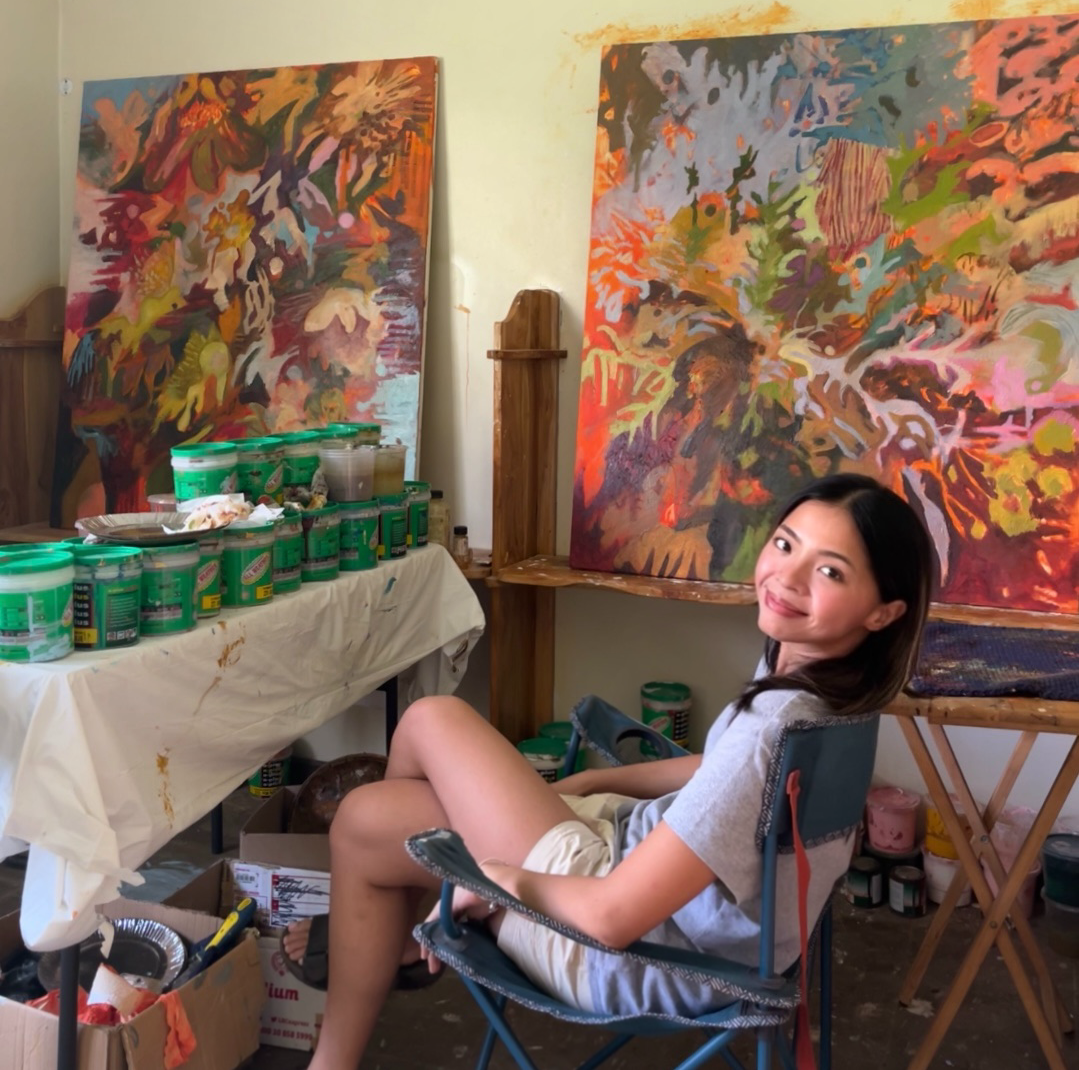
Katelyn Minoso’s art is informed by both her environment and her academic background in Advertising and Public Relations. After mastering foundational techniques and drawing hyperrealistic portraits at twelve years old, she has recently pivoted toward a more formalist deconstruction of the figure.
The evolution of her artistic trajectory begins with the precision of realism, then transitions to impressionistic portraits of the people around her, and culminates in her most recent series. Her latest works prioritize geometric harmony and spatial relationships over representations. This progression in her art practice mirrors the radical shifts of Postmodernism, marked by a brave and drastic departure from traditional mimesis in favor of emotive abstraction.
Minoso’s artistic growth overcomes geographical boundaries, with her art being exhibited in Manila and Thailand. In her solo exhibitions, “Sa Palibot” (2022) and “Two Places at Once” (2023), she continues to explore the dialogue between the individual and their surroundings, treating the environment not just as a backdrop, but as a primary catalyst for creative inquiry.
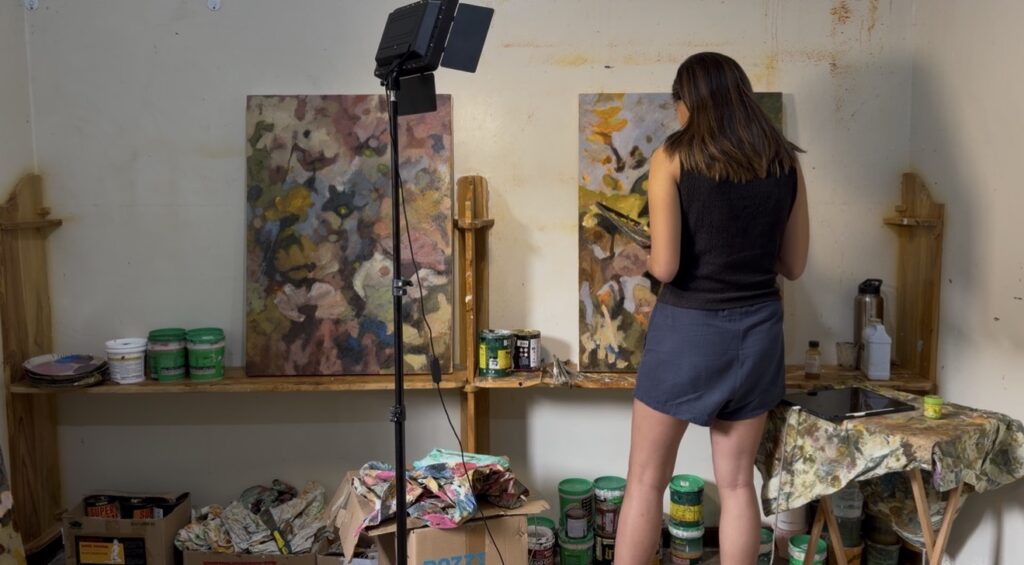
Lately, most of the themes in my work come from a period of reflection in my life. I tend to look inward a lot. I overthink, I analyze my experiences, and I feel things deeply—even moments that might seem small to other people. I may appear composed on the outside, but those who know me well know how much emotion I carry beneath that. When I try to understand those feelings, I often turn to nature. Nature reminds me that things eventually find their place. Nothing forces its way into becoming—it grows, shifts, and settles over time. In the same way, I try to allow my life and my art to unfold naturally. In my practice, I mainly work with oil paint, but I’ve been experimenting more lately with materials like enamel and spray paint. I like how enamel creates thick, almost sculptural surfaces, while spray paint brings out luminosity and movement in color. I’ve also learned that good art doesn’t always come only from traditional materials—sometimes things meant for houses or construction bring out textures that feel closer to what I want to express.
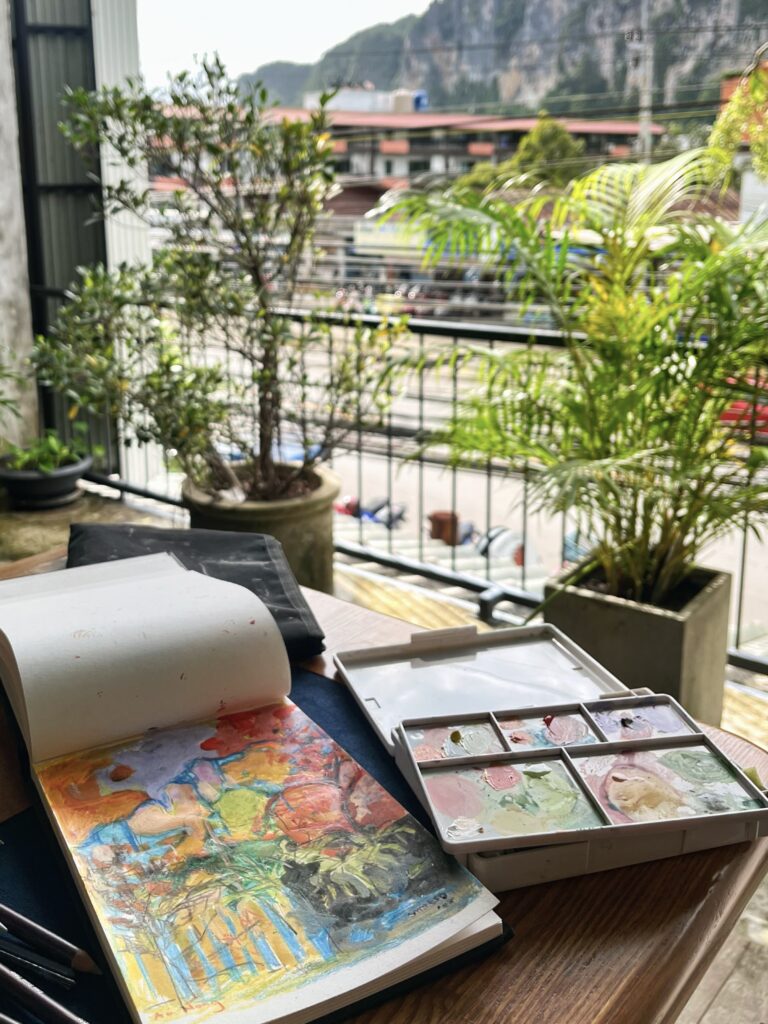
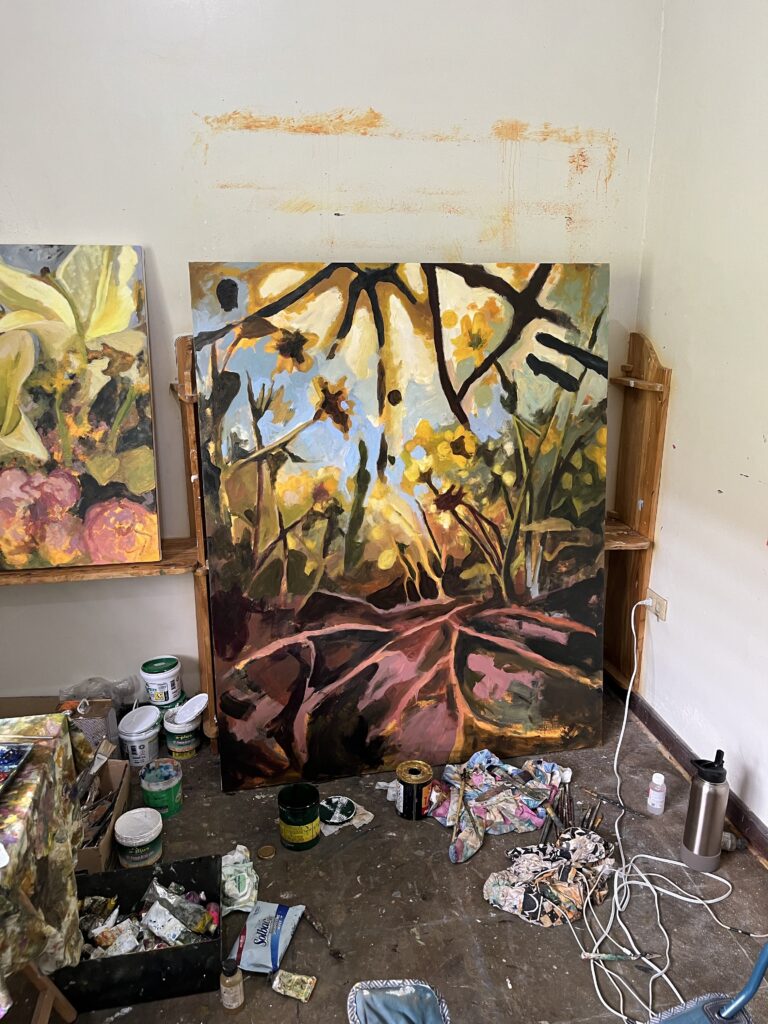
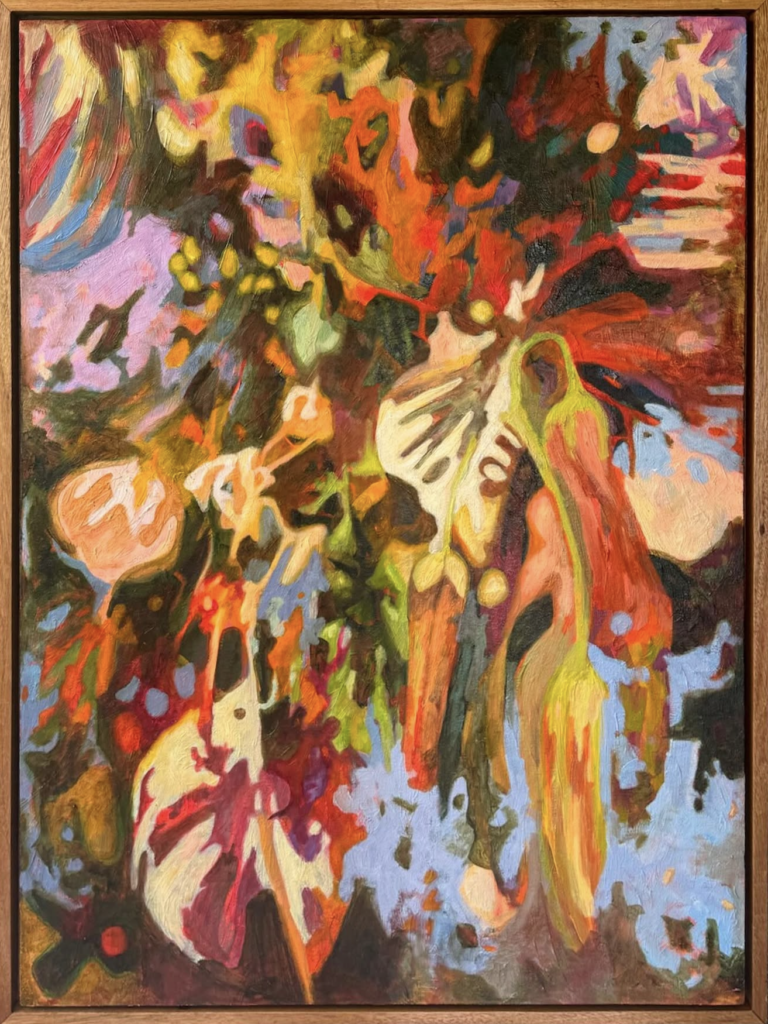
Nature also became a way for me to process grief. Last year, I painted a series inspired by my uncle, who passed away in October 2025. He was a fashion designer long before I was born and, in many ways, the reason I was first drawn to drawing. When my sisters and I were young, he used to sketch cartoon characters, dresses, and portraits for us. At that time, I didn’t fully realize it, but those small moments shaped how I saw creativity. The series I created after his passing may look like simple flower paintings to some people, and I understand that. But for me, each one carried a part of his story. They reflected different phases of his life—from his early beginnings as a designer, to the height of his career, to the quieter and more difficult chapters. When I released the series, I found myself crying more than I expected. I think part of it was the realization that he never got to see the work, or how much he influenced the path I chose. The piece shown here is called Withering Grace, and it’s the only one from that series that I still have.

My mornings are a quiet but important part of my life as an artist. I wake up at 4:00 AM and start the day with meditation, yoga, and some form of movement like walking or strength training. It may sound overly structured, but that routine helps me stay grounded before the busyness of the day begins. Since I also work in PR and advertising alongside my art practice, my schedule can get quite full, so I try to protect my mornings as time for myself. I like to read, sketch, or simply explore ideas without pressure. I’m also someone who finds comfort in planning—I time-block my days and color-code my schedule. It’s probably my way of creating a sense of order while balancing different roles in my life. I try to be in bed by 10:00 PM because I’ve realized that my mind is most creative in the early hours of the day.
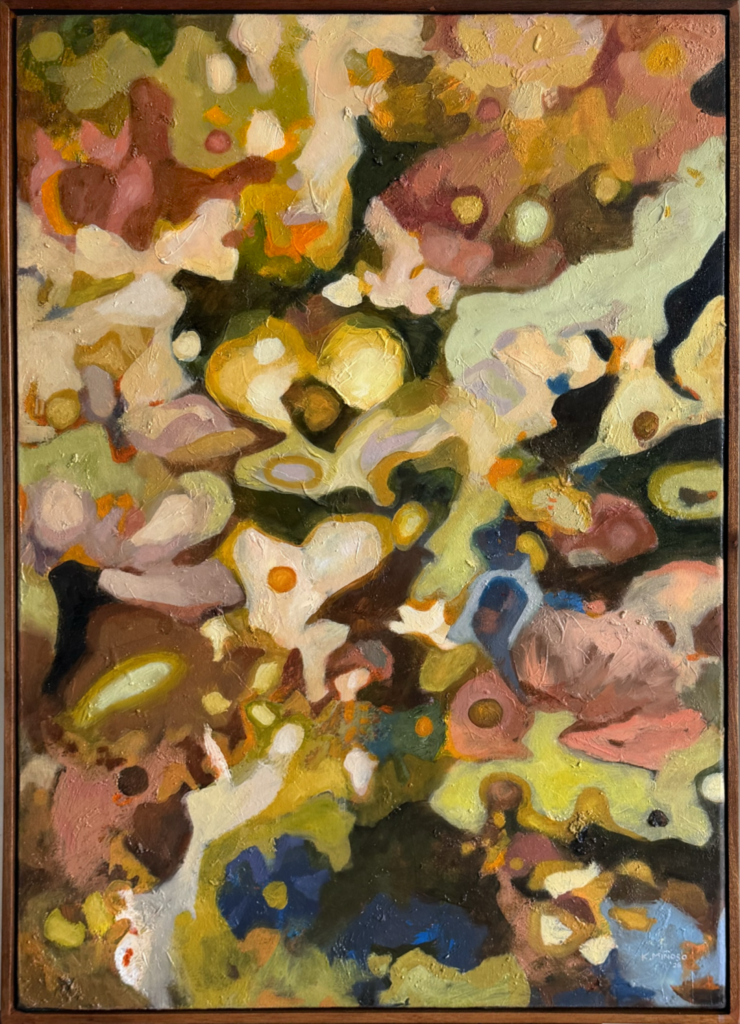
One painting that came from this period of reflection is called Becoming, which I created for an exhibit about the roles of women. For a long time, I believed I needed to clearly define my place in the world—my purpose, my role, and the kind of woman I was meant to be. I planned my life carefully, believing that if I followed the right path, everything would eventually make sense. But over the past few years, that certainty began to loosen. Even when I thought I knew who I wanted to become, life would move me in unexpected directions. At first, that scared me. I felt like I was losing the version of myself I had carefully imagined. But through painting this series, I started to see things differently. Growth rarely happens in straight lines. Like wildflowers, we sometimes grow where we didn’t expect to, in places we never planned for. Becoming is my way of accepting that uncertainty. Instead of trying to arrive at a fixed definition of who I am, I’m learning to allow myself to change, to move, and to grow with time.