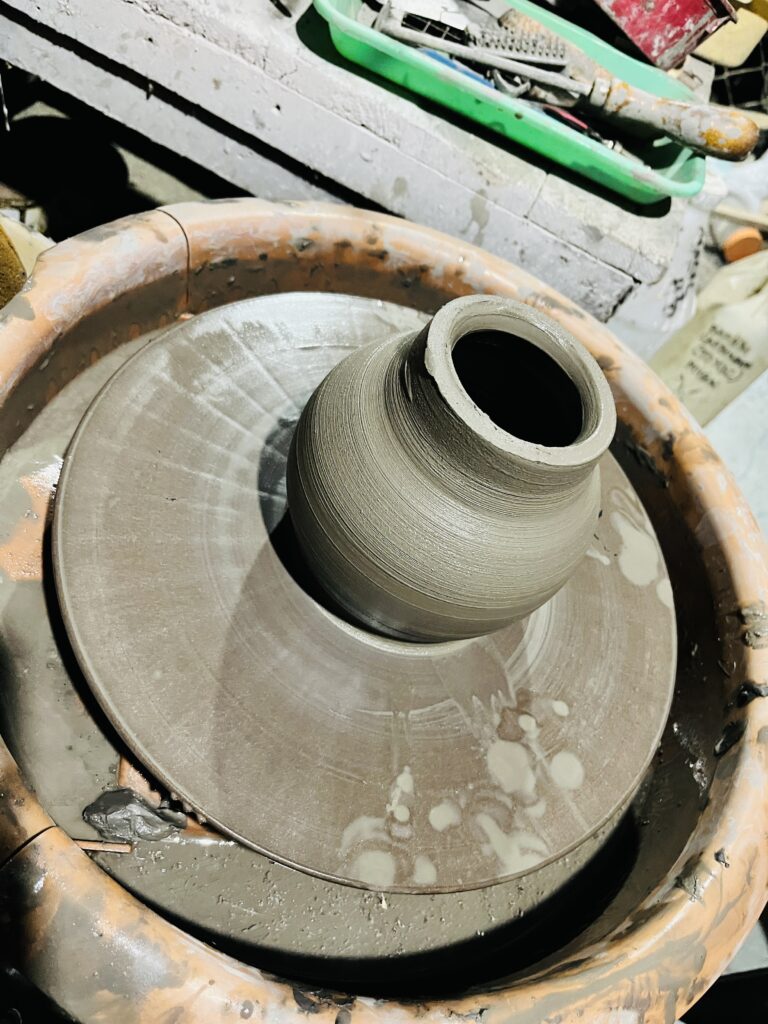
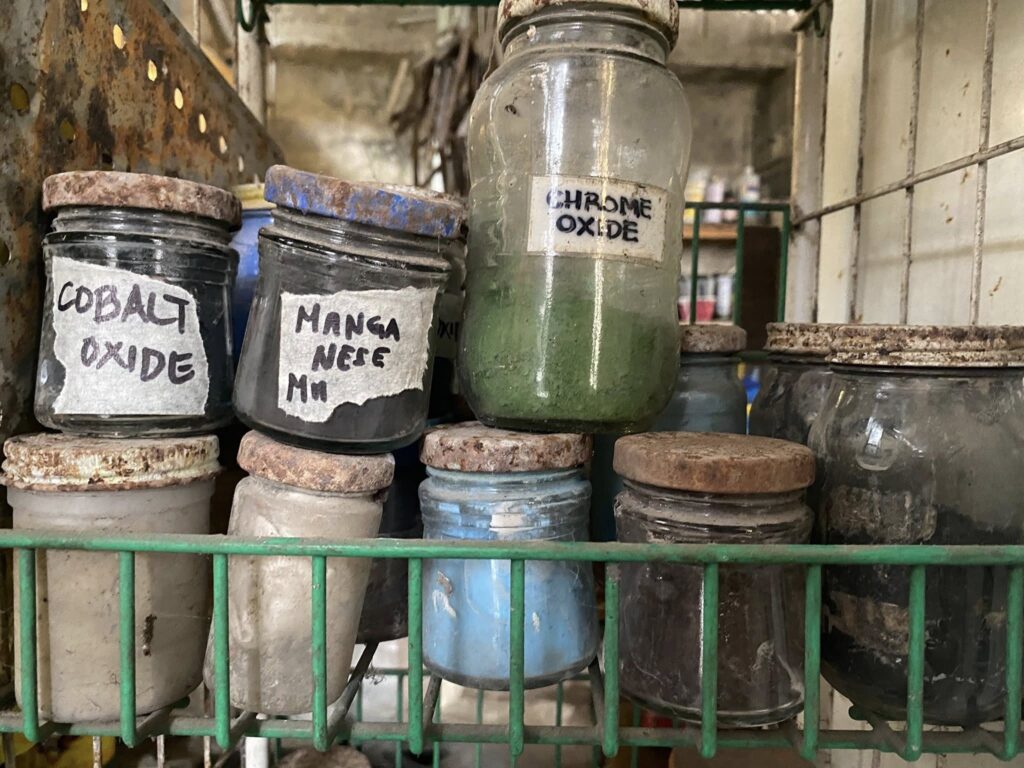
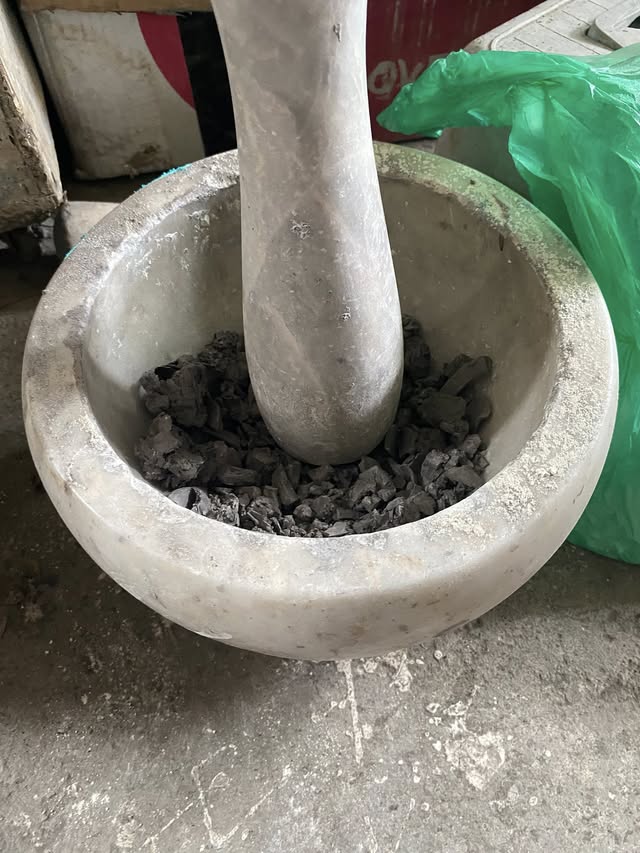
Alan Cabalfin’s workshop is more of an alchemist’s laboratory than an artist’s studio. His inventory lay bare: canisters labeled “manganese” and “cobalt” lined the shelves, a meticulous catalog of ingredients he uses for glazing. In every corner, cabinets hold the accumulated materials from his decades-long art practice. Amidst this organized chaos—sacks of clay, processed portions in plastic bags, and vessels awaiting the kiln—stand two potter’s wheels.
He gestures toward one of the machines. “My brother brought this wheel from the US,” he explains in his soft tone. “He had to dismantle it, piece by piece. When it arrived, I had to reassemble everything. I think I might have to fix it; it wobbles when I use it.” Cabalfin returned to the Philippines in 2021 after leaving the United States. He settled in his hometown of Leon and began patiently building his workshop.

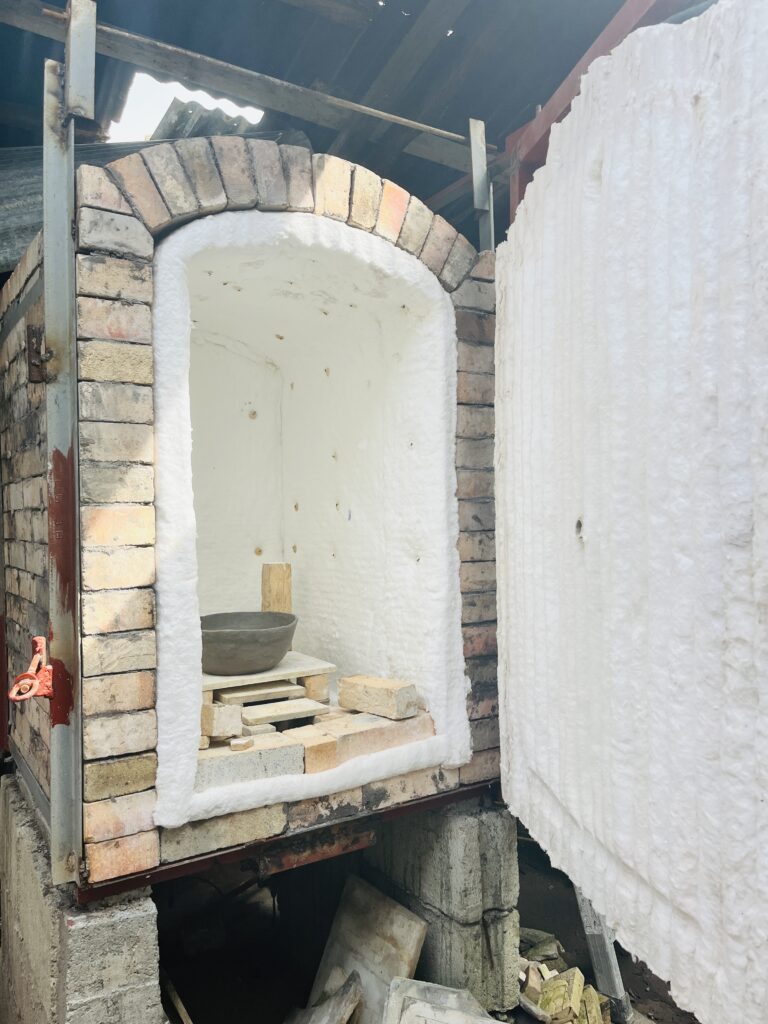

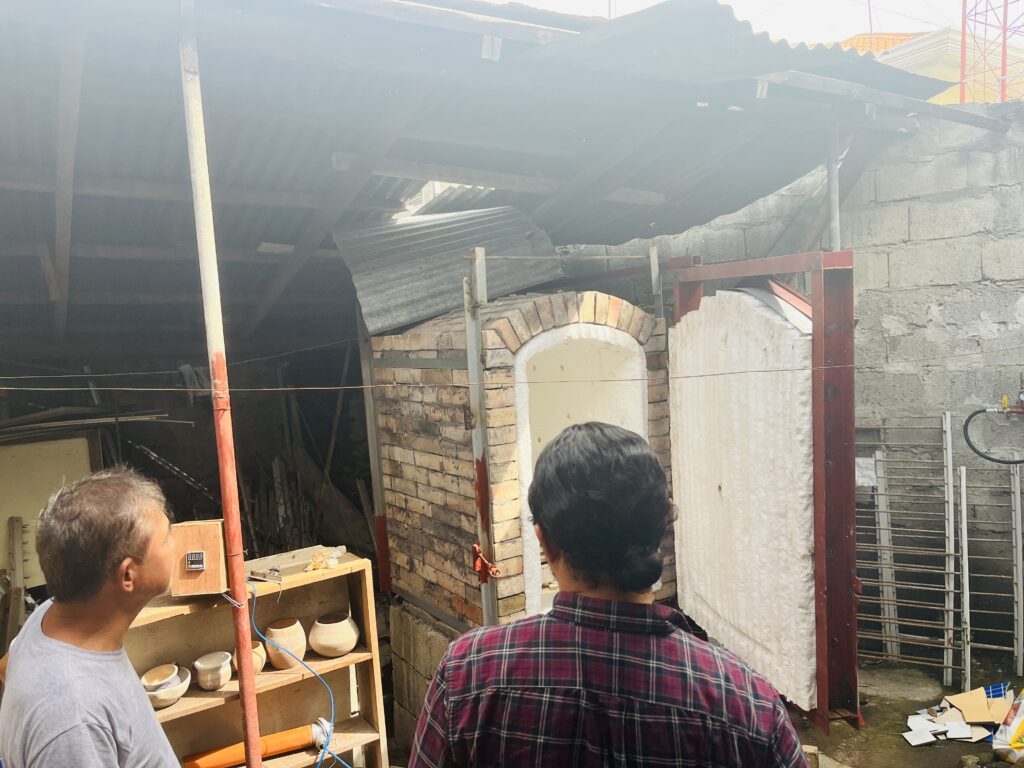
It was early afternoon. He had just opened the kiln, and a batch of newly fired vases now lay on the ground. The kiln itself, he declared with enthusiasm, was new. “This is only the second firing I’ve done in this kiln,” he noted.
With the new kiln, he can shorten the otherwise laborious brick-by-brick stacking process demanded by traditional wood firing to keep the kiln closed. Although the process is less strenuous now, he also recalls, with fascination, that wood firing can create unexpected flashing or scorch marks on the bisqueware. This was, perhaps, some sort of collaboration: the artist yielding his creation to the unpredictable elements of fire. When asked about the cost of production with the new kiln, he says that one gas tank costs P5,000. He happily shared that his supplier let him use the current tank for free.
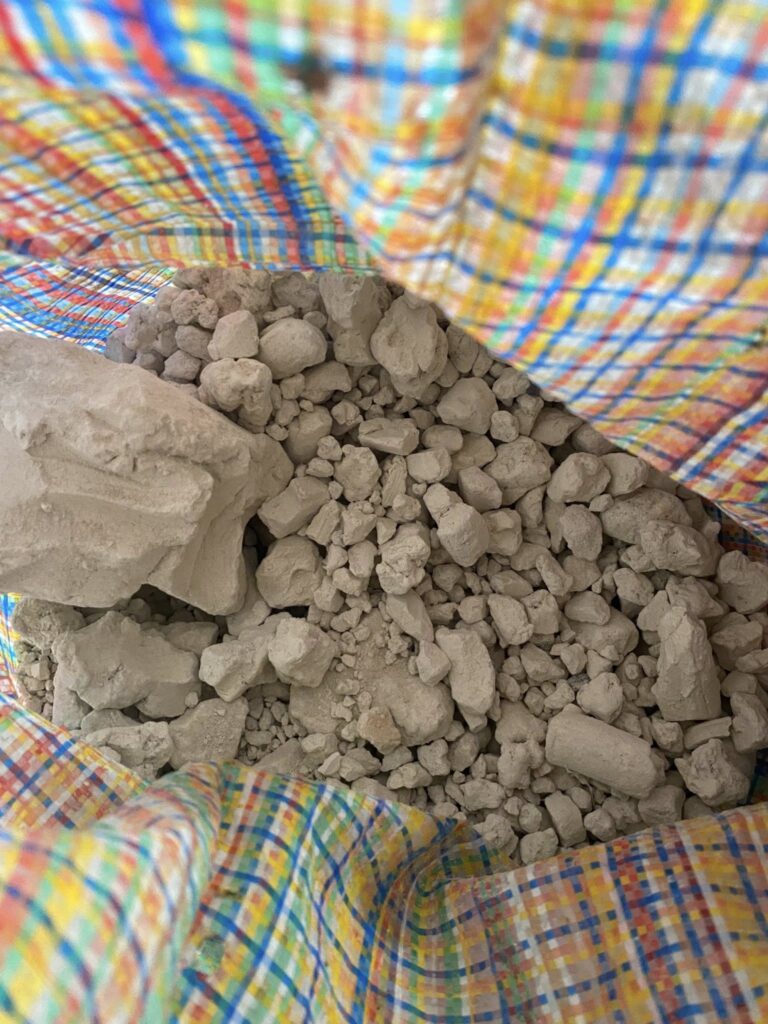
Out of necessity, Cabalfin has become resourceful in his pursuit of clay. When he can, he works with clay that he found locally. “This is the clay from San Dionisio,” he states. He even took clay from his own farm to add to the mixtures of clay. “My brother brought this clay from the US,” he points at a hardened block of white clay sitting in one corner of his studio. But perhaps his most immediate supply is the mounds of clay lining the table near his wheels. When asked about it, he recalled how he bought the 50 kilos of clay in Manila and transported it himself via roro ferry. Sourcing of clay alone is a commitment measured in weight and in distance, a negotiation between what is available and what must be brought in.

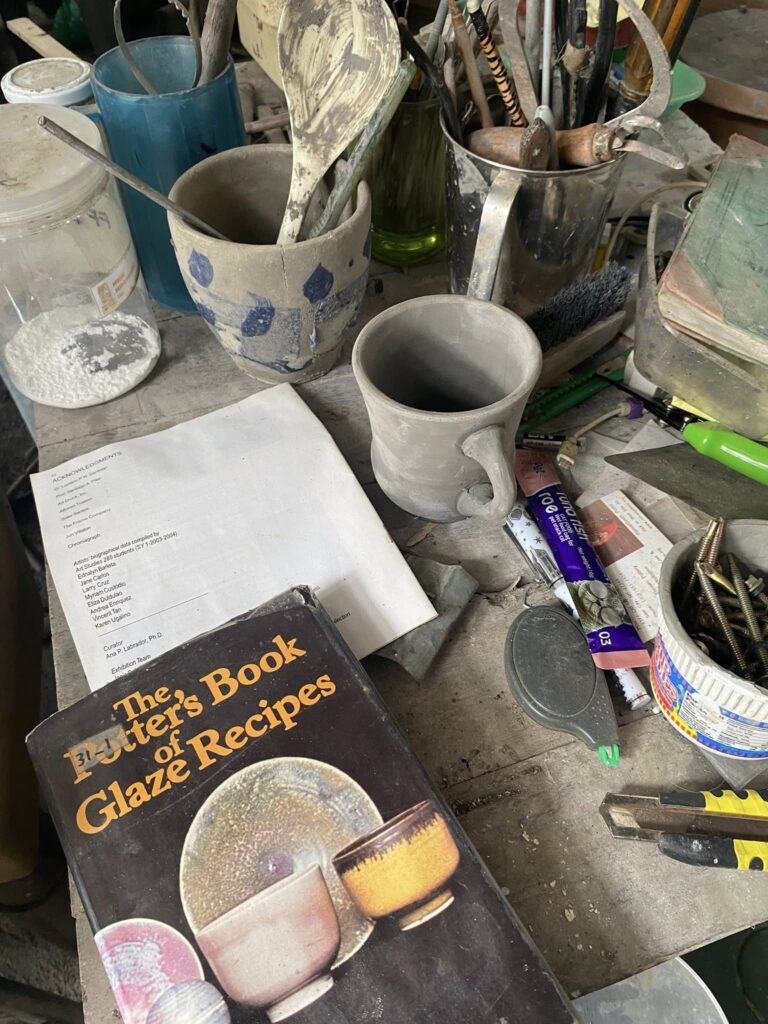
Another process that Cabalfin obviously enjoyed was experimenting with glaze. He opened one of his cabinets and took a copy of a book. “This is where I base my formula.” It’s a copy of “The Potter’s Book of Glaze Recipes” that he brought home with him from the US. He picked up one of the vases from the batch that had recently gone through his kiln. A vase with blue streaks on the surface, a glazing that he is attempting to perfect. But in his current stage of experimentation, the consistency remains elusive but offers some sort of surprise with each of the vessels, terra cotta, ceramics, porcelain, and stoneware, turning unique by itself.
Clay is one of the oldest artistic media used by sculptors, predating bronze or stone. The permanence of this material is why some of our knowledge about our past came from fired clay and tablets. Artists mainly choose clay as a medium because of its tactility and materiality. The unfired clay offers a direct interaction between the artist and the material. When wet, it is easy for clay to capture the intention of the artist. He can shape, pinch, coil, sculpt, or throw the clay on the wheel to create form or evoke emotion using these forms. The soft earth hardened by intense heat as a process of transformation and metamorphosis.
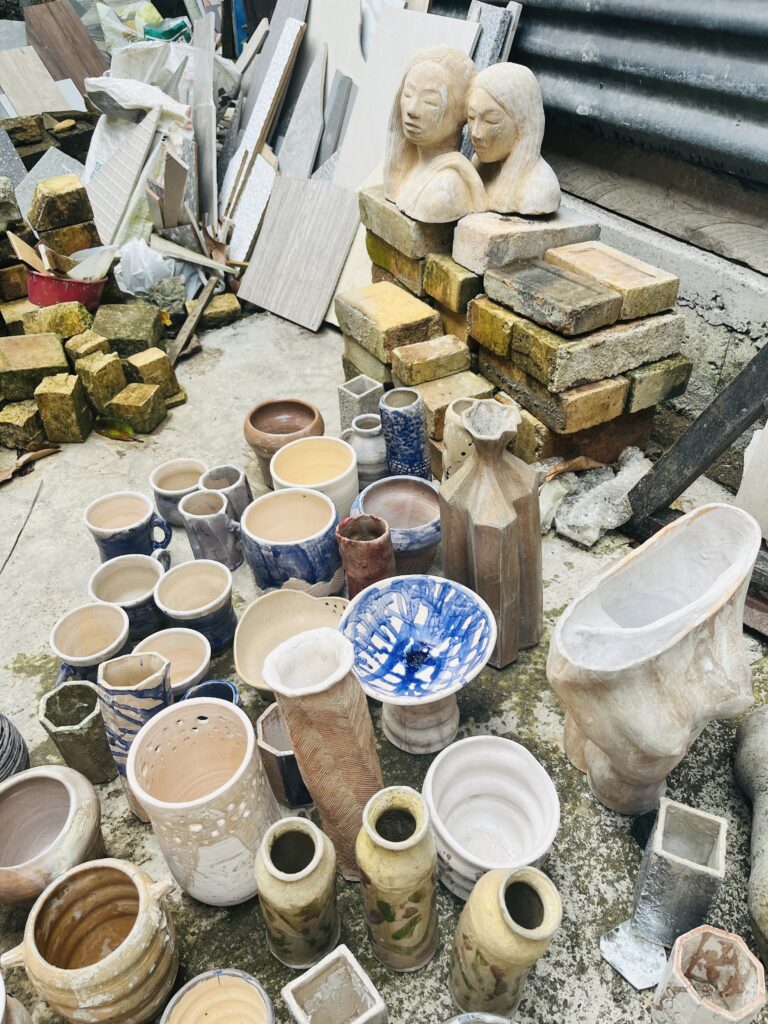
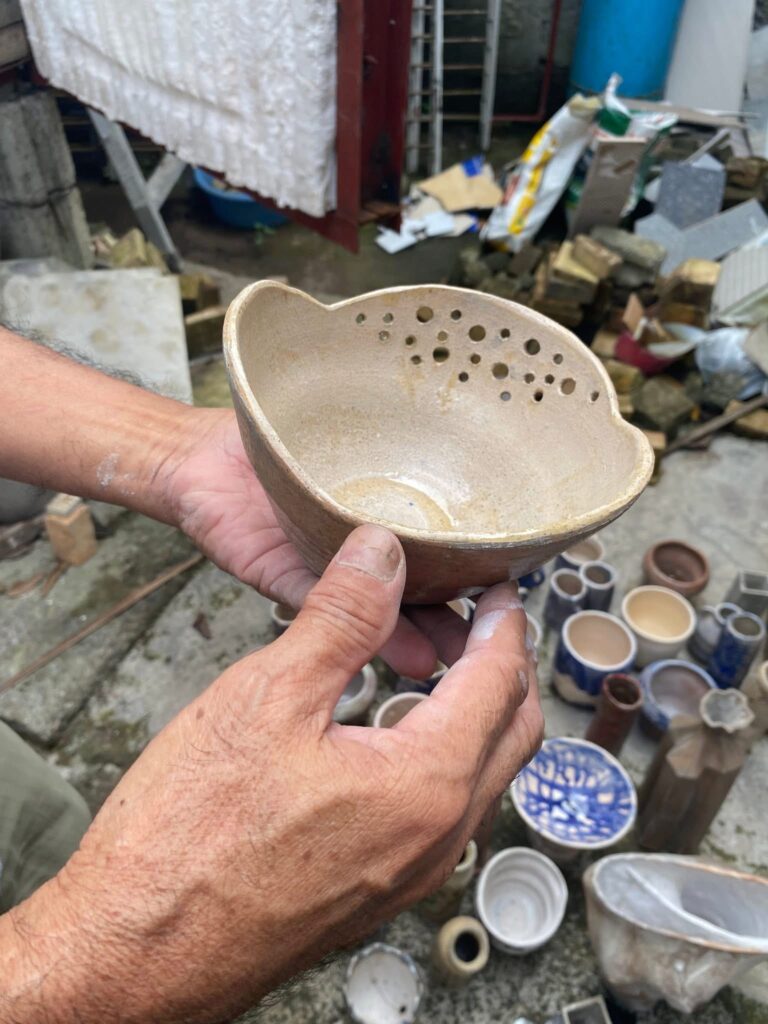
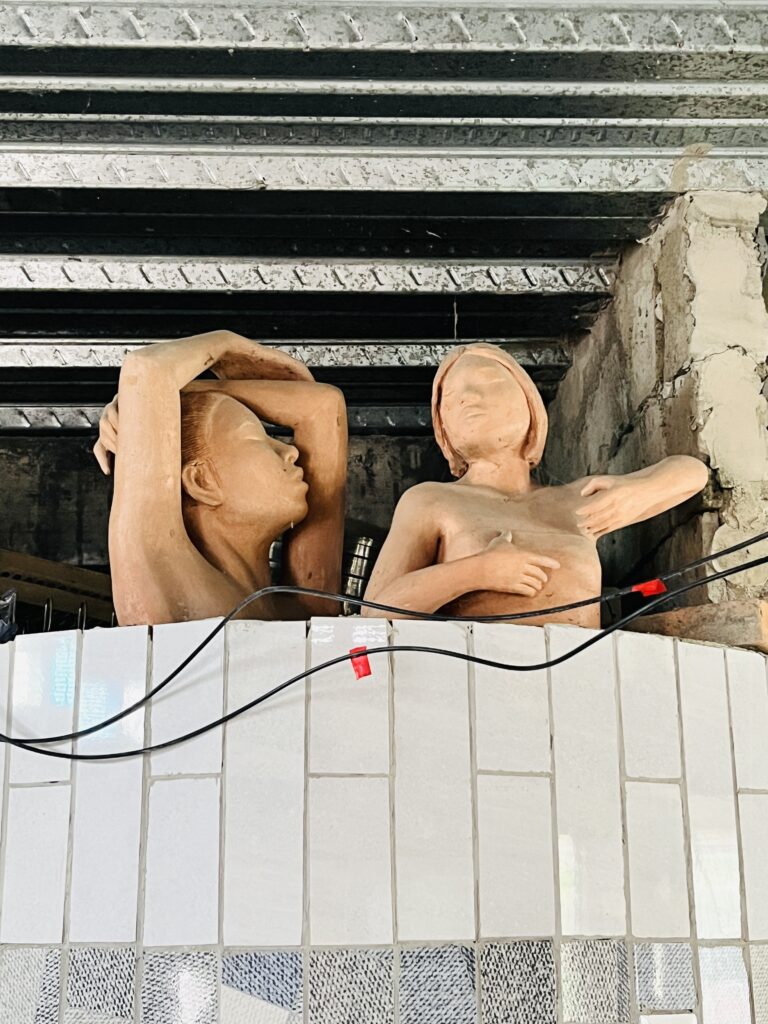

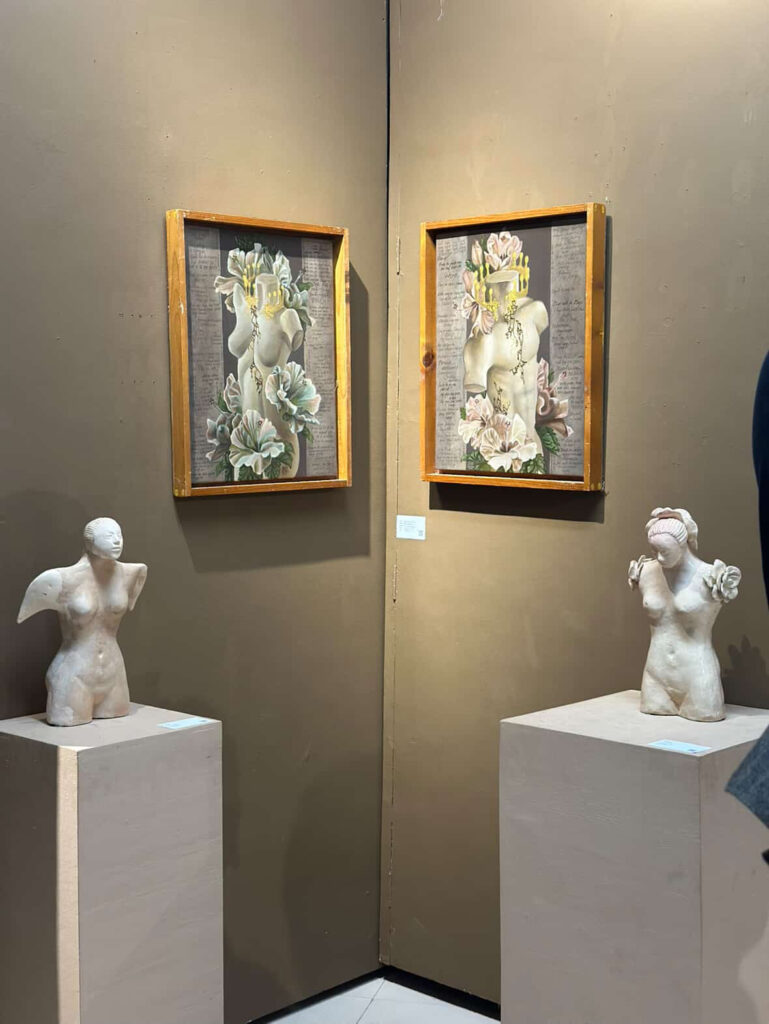
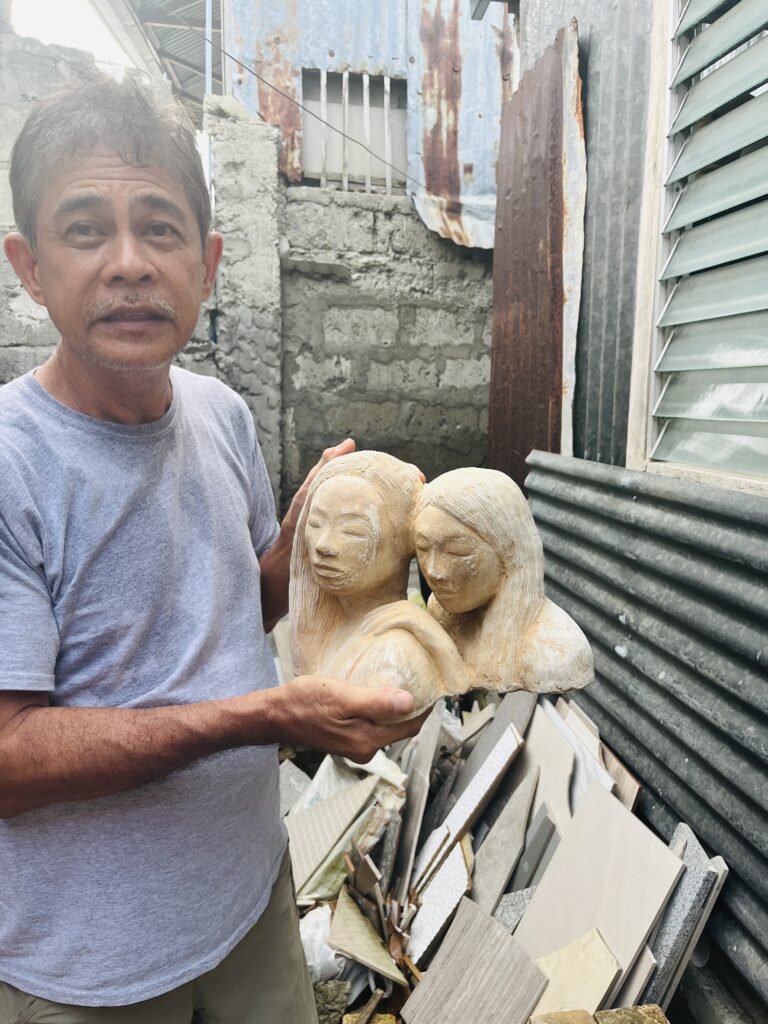
In the case of Alan Cabalfin, he uses clay as an intersection between craft and fine art. This tension in his practice is necessary: he is a chemist measuring the elements for the precise formula of his glaze and a farmer harvesting clay from the soil he inherited from his ancestors. This intersection of science and tradition culminates in the creation of an object that contains his artistic control and acceptance of nature. His sculptures are a testament to the enduring significance of clay as a medium.
Looking into the future, Alan Cabalfin shares his plans of converting the area where his ancestral house currently stands into a workshop where he could share this alchemy with the younger generation of sculptors. He also envisions the first floor of his house as a curio shop where he could display his works for the community and perhaps the tourists who flock to Leon, Iloilo’s own summer capital. For now, all of these, he says, are a work in progress—much like his studio and his artistic process. Yet, if anything has defined Alan Cabalfin’s art, it is this: much like his chosen medium, his practice is persistent and hardened by pressure.